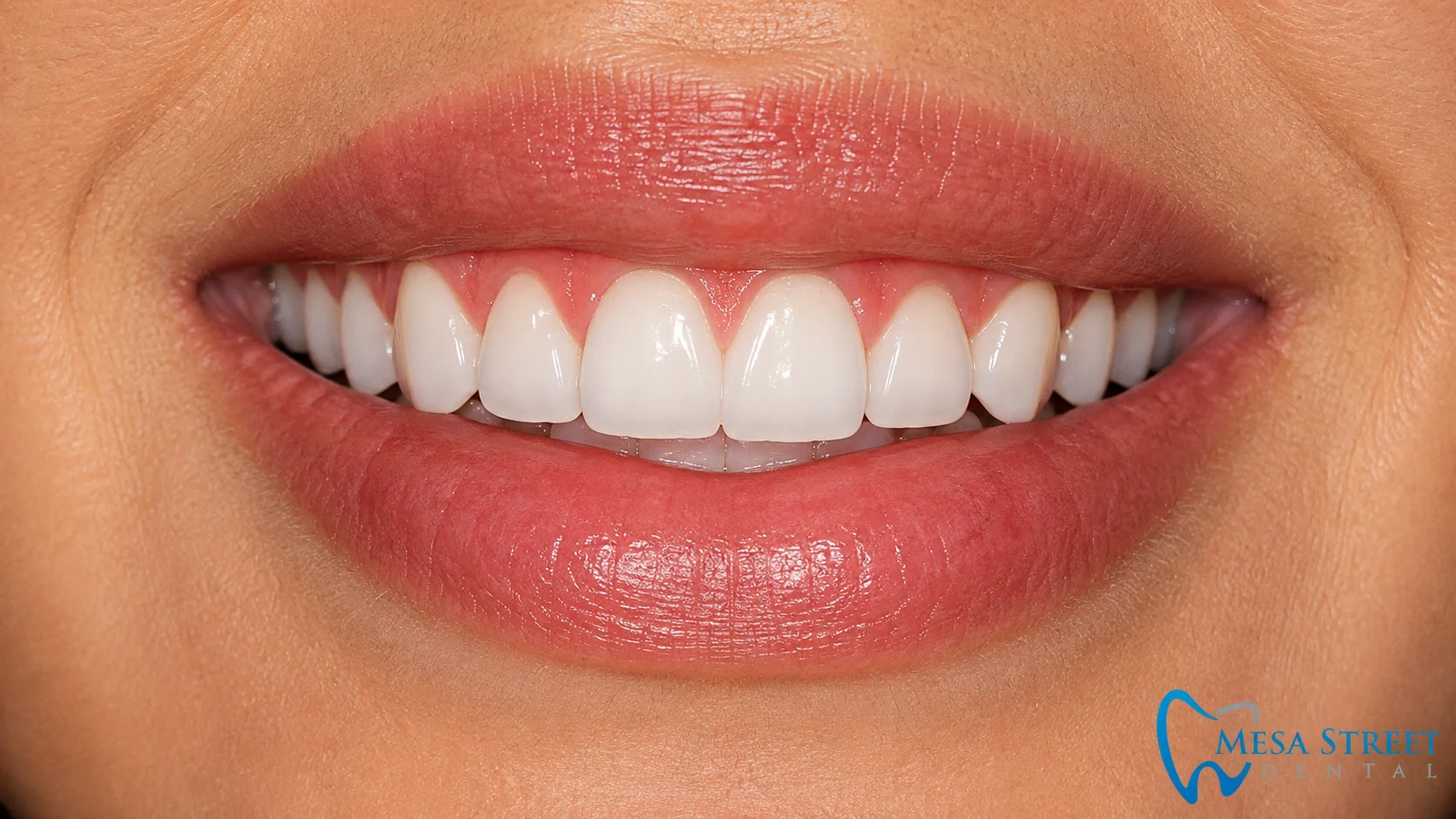
Gum recession happens when the gum tissue pulls away from the teeth, exposing more of the tooth or tooth root. This can make teeth look longer, cause tooth sensitivity, and increase the risk of tooth decay near the gumline.
Receding gums are common, but they should not be ignored. Gumline recession can be caused by brushing too hard, plaque buildup, tartar buildup, gum disease, periodontal disease, tooth position, tobacco use, teeth grinding, or poor oral hygiene. In some cases, early gum recession can be managed with better home care and professional dental cleanings. More advanced cases may need periodontal care, scaling and root planing, or gum graft treatment.
At Mesa Street Dental, patients can receive an oral health evaluation to check gumline health, exposed roots, gum pockets, tooth sensitivity, and signs of gum disease.
What Is Gum Recession?
Gum recession is a dental condition where the gum tissue moves away from the tooth surface. As the gums recede, the tooth root may become exposed.
Tooth roots do not have the same enamel protection as the visible crown of the tooth. When roots are exposed, teeth may become more sensitive to hot, cold, sweet, or acidic foods and drinks. Exposed tooth roots can also be more vulnerable to decay.
Gum recession can affect one tooth, several teeth, or the whole mouth. It may happen slowly, so some patients do not notice it until they develop sensitivity or see changes in their gumline.
Why Are My Gums Receding?
Gums can recede for several reasons. Sometimes the cause is one habit, such as brushing too hard. Other times, gum recession is linked to periodontal disease, bacteria below the gumline, or long-term gum inflammation.
Common gum recession causes include:
- Brushing too hard
- Using a hard-bristled toothbrush
- Plaque buildup
- Tartar buildup
- Gingivitis
- Periodontal disease
- Gum infection
- Poor flossing habits
- Teeth grinding or clenching
- Misaligned teeth
- Tobacco use
- Oral piercings
- Thin gum tissue
- Past dental trauma
A gum recession dentist can evaluate the cause and recommend treatment based on the severity of the recession.
Gum Recession Symptoms
Gum recession symptoms can be mild at first. Some patients notice a change in appearance before they feel pain. Others first notice sensitivity near the gumline.
Common signs of gum recession include:
- Teeth looking longer than before
- Sensitive teeth from receding gums
- Exposed tooth roots
- Gumline pulling away from the teeth
- Tooth sensitivity to cold, heat, sweets, or brushing
- Gum inflammation
- Bleeding gums
- Red or swollen gums
- Bad breath
- Loose teeth in advanced cases
- Gum pockets
- Notches near the gumline
- Tooth root discoloration
- Pain or tenderness near the gums
If you notice these signs, schedule a dental checkup. Early evaluation can help prevent the condition from getting worse.
Early Gum Recession
Early gum recession may not cause major pain. You may notice slight tooth sensitivity, a small change in gumline shape, or teeth appearing a little longer.
At this stage, treatment may focus on stopping progression. Your dentist may recommend a softer toothbrush, improved brushing technique, better flossing habits, professional cleaning, fluoride treatment, or monitoring the gumline over time.
Early gum recession is easier to manage than advanced recession. Waiting can increase the risk of exposed roots, tooth decay, and gum disease complications.
Learn what fluoride does to your teeth and how it may help strengthen vulnerable tooth surfaces and reduce cavity risk.
Gum Disease and Recession
Gum disease and recession are closely connected. Plaque and tartar can collect along the gumline and below the gums. This can lead to gum inflammation, infection, gum pockets, and loss of supporting tissue.
Gingivitis is the early stage of gum disease. It may cause red, swollen, or bleeding gums. If untreated, it can progress to periodontal disease, which can damage the gum tissue and bone that support the teeth.
Gum recession from periodontal disease may require deeper treatment than simple home care changes.
Brushing Too Hard and Receding Gums
Brushing too hard can contribute to receding gums. Aggressive brushing, especially with a hard-bristled toothbrush, can wear down gum tissue and enamel over time.
Signs you may be brushing too hard include:
- Tooth sensitivity near the gumline
- Notches near the gums
- Gumline recession
- Frayed toothbrush bristles
- Gum irritation after brushing
- Enamel wear
To protect your gums, use a soft-bristled toothbrush and gentle circular motions. Brushing should remove plaque, not scrub the gums aggressively.
Exposed Tooth Roots and Sensitivity
Exposed tooth roots are a common reason patients seek tooth sensitivity treatment. The root surface is more sensitive because it is not protected by enamel like the crown of the tooth.
Sensitive teeth from receding gums may feel painful when you have:
- Cold drinks
- Hot drinks
- Sweet foods
- Acidic foods
- Cold air
- Brushing near the gumline
- Flossing in sensitive areas
Treatment may include desensitizing toothpaste, fluoride treatment, dental bonding, gum health treatment, or gum graft treatment depending on the cause and severity.
Can Receding Gums Grow Back?
Receding gums usually do not grow back on their own. Once gum tissue is lost, it often does not naturally return to its original position.
However, treatment can help stop the recession from getting worse, protect exposed roots, reduce sensitivity, and improve gumline health. In some cases, gum graft treatment may be recommended to cover exposed roots or improve tissue support.
The right treatment depends on the cause, severity, gum tissue thickness, tooth position, and overall oral health.
How to Fix Receding Gums
How to fix receding gums depends on why the gums are receding and how advanced the condition is. Mild recession may only need prevention and monitoring. Moderate or advanced recession may need periodontal care or surgical treatment.
Common receding gums treatment options include:
- Better brushing technique
- Soft-bristled toothbrush
- Fluoride treatment
- Tooth sensitivity treatment
- Dental cleaning for gum health
- Deep cleaning for gum disease
- Scaling and root planing
- Gum infection treatment
- Gum graft treatment
- Nightguard if grinding is involved
- Periodontal maintenance
- Dental bonding for exposed roots in select cases
A dentist can determine which treatment fits your case after an exam.
Dental Cleaning for Gum Health
Professional dental cleaning helps remove plaque and tartar that brushing and flossing cannot remove at home. This supports healthy gums and can help reduce inflammation around the gumline.
A routine cleaning may be recommended for patients with mild plaque buildup and no deep gum pockets. If gum disease is present, a deeper treatment may be needed.
Regular cleanings are also important for gum disease prevention and early detection of gumline changes.
Deep Cleaning for Gum Disease
Deep cleaning for gum disease is used when plaque and tartar collect below the gumline. This treatment is different from a routine cleaning.
Deep cleaning may include scaling and root planing.
Scaling
Scaling removes plaque and tartar from the tooth surface and below the gumline.
Root Planing
Root planing smooths the tooth root surface to help the gums heal and reduce bacteria buildup.
Scaling and root planing may be recommended if you have gum pockets, bleeding gums, tartar below the gumline, gum inflammation, or gum recession from periodontal disease.
Gum Infection Treatment
Gum infection treatment depends on the severity of the infection. Mild gum inflammation may improve with professional cleaning and better oral hygiene. More advanced infection may require deep cleaning, periodontal therapy, medication, or referral to a specialist.
Signs of gum infection may include:
- Swollen gums
- Bleeding gums
- Gum tenderness
- Pus near the gums
- Bad breath
- Loose teeth
- Gum pockets
- Pain when chewing
Gum infections should be treated early to protect the gum tissue, bone, and teeth.
Gum Graft Treatment
Gum graft treatment may be recommended when gum recession is more advanced or when exposed roots need better coverage. During a gum graft, tissue is placed over the exposed root area to improve gumline support and root protection.
A gum graft may help:
- Cover exposed tooth roots
- Reduce sensitivity
- Protect against root decay
- Improve gumline appearance
- Support long-term gum health
Not every patient with gum recession needs a gum graft. Your dentist may recommend periodontal evaluation to decide whether grafting is right for you.
Can Gum Recession Cause Tooth Decay?
Yes, gum recession can increase the risk of tooth decay near the roots. Exposed roots are more vulnerable because they do not have the same enamel protection as the upper part of the tooth.
Root cavities can develop faster and may be harder to restore if ignored. Preventive dental care, fluoride, good brushing technique, and regular checkups can help protect exposed roots.
Read more about how to prevent cavities with fluoride, daily oral hygiene, healthy food choices, and regular dental care.
Can Gum Recession Lead to Loose Teeth?
Advanced gum recession linked to periodontal disease can contribute to loose teeth. This usually happens when the gums and bone that support the teeth become damaged.
Mild recession does not always mean a tooth is loose. But if you notice movement, shifting teeth, gum pockets, or pain when chewing, schedule an exam as soon as possible.
Gum Recession Prevention
Gum recession prevention starts with daily habits and routine dental care. You may not be able to control every risk factor, but you can reduce the chance of recession getting worse.
To help prevent gum recession:
- Brush gently with a soft-bristled toothbrush
- Avoid aggressive scrubbing
- Floss daily
- Schedule routine dental cleanings
- Treat gum disease early
- Avoid tobacco products
- Wear a nightguard if you grind your teeth
- Keep up with periodontal care if recommended
- Use fluoride toothpaste
- Do not ignore bleeding gums
- Schedule dental checkups to monitor gumline changes
The goal is to protect gum tissue, tooth roots, and long-term oral health.
When Should You See a Dentist for Receding Gums?
You should see a dentist if you notice signs of gum recession, tooth sensitivity, exposed roots, bleeding gums, or changes in your gumline.
Schedule a dental visit if you have:
- Teeth that look longer
- Gumline recession
- Tooth sensitivity near the gums
- Gum swelling
- Bleeding gums
- Gum pockets
- Bad breath that does not improve
- Loose teeth
- Plaque or tartar buildup
- Pain when brushing or flossing
- Exposed tooth roots
A dentist can identify the cause and recommend treatment before the recession becomes more advanced.
Gum Recession Care at Mesa Street Dental
Through family dentistry in El Paso, TX, our team can evaluate gum recession, tooth sensitivity, plaque buildup, and other oral health concerns. The dental team can check your gumline, measure gum pockets, evaluate plaque and tartar buildup, and review your brushing and flossing habits.
Depending on your needs, treatment may include preventive dental care, dental cleaning for gum health, deep cleaning for gum disease, scaling and root planing, fluoride support, sensitivity treatment, or referral for gum graft treatment when needed.
If you are dealing with receding gums in El Paso, TX, Mesa Street Dental can help you understand the cause and choose the right next step for your gum health.
Final Thoughts
Gum recession happens when gum tissue pulls away from the teeth and exposes more of the tooth or root. It can be caused by brushing too hard, plaque buildup, tartar buildup, gum disease, periodontal disease, gum infection, teeth grinding, tooth position, or thin gum tissue.
Early gum recession may be managed with better brushing technique, professional cleanings, fluoride, and preventive dental care. More advanced cases may need periodontal care, deep cleaning, scaling and root planing, or gum graft treatment.
If you notice receding gums, exposed tooth roots, tooth sensitivity, or changes in your gumline, schedule a dental checkup at Mesa Street Dental. Treating gum recession early can help protect your teeth, gums, and long-term smile health.