
Dental implants work by replacing both the root and visible part of a missing tooth. A dental implant is placed into the jawbone, where it acts like an artificial tooth root. After healing, an abutment and dental crown are attached to the implant to create a stable, natural-looking replacement tooth.
Dental implants can replace one missing tooth, several missing teeth, or a full arch of teeth. They can support a single dental crown, an implant bridge, implant dentures, or full-mouth dental implant restorations such as All-on-4.
The main reason implants feel secure is a healing process called osseointegration. This is when the jawbone bonds with the implant post, helping it stay stable during chewing, biting, and speaking.
If you are missing teeth and want a stable replacement option, dental implants in El Paso, TX may help restore your smile, chewing function, and long-term oral support.
What Are Dental Implants?
Dental implants are tooth replacement options used in implant dentistry to restore missing teeth. A dental implant is usually made of a biocompatible material such as titanium or zirconia. It is placed into the jawbone to replace the missing tooth root.
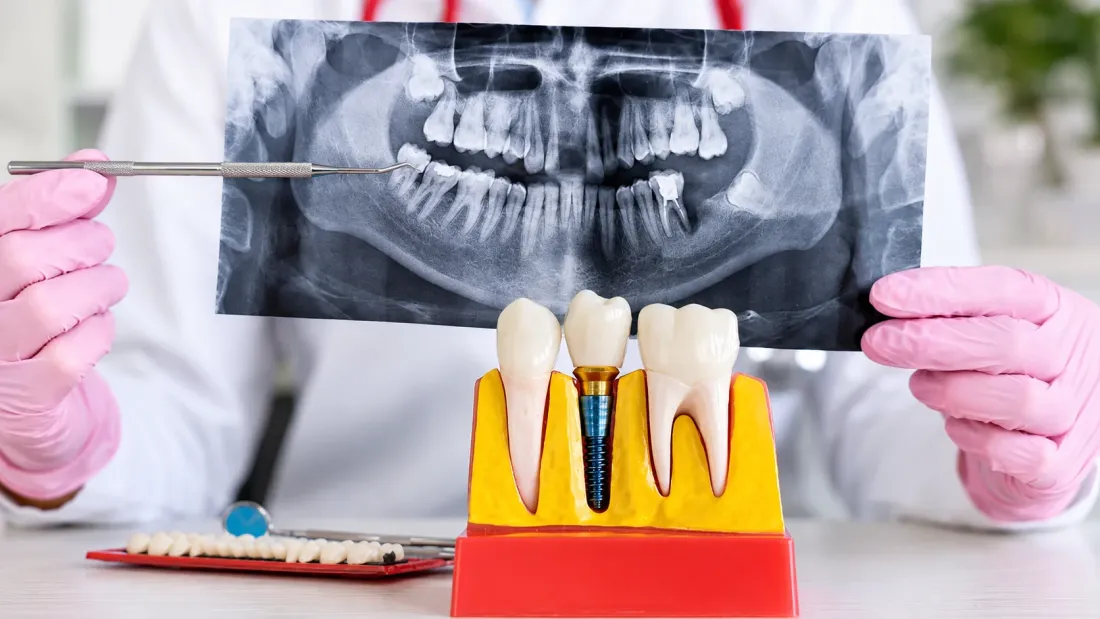
A complete dental implant restoration usually has three main parts:
- Implant post: The part placed into the jawbone. It works like an artificial tooth root.
- Abutment: The connector between the implant post and the replacement tooth.
- Dental crown: The visible artificial tooth that looks and functions like a natural tooth.
For full-mouth implants, several implant posts may support a full arch of replacement teeth instead of replacing every missing tooth with a separate implant.
How Do Dental Implants Replace Teeth?
Dental implants replace teeth by rebuilding both the root support and the visible chewing surface. Traditional dentures sit on top of the gums. A dental bridge uses nearby teeth for support. A dental implant is different because it is anchored in the jawbone.
Here is how the dental implant works:
- The implant post is placed into the jawbone.
- The bone heals around the implant through osseointegration.
- An abutment is attached to the implant.
- A dental crown, bridge, or full-arch restoration is attached.
- The replacement tooth becomes stable enough for normal chewing and speaking.
Because the implant is supported by the jawbone, it can provide strong bite support and a natural feel.
Why the Jawbone Matters for Dental Implants
The jawbone is important because it holds the implant in place. When a natural tooth is lost, the bone in that area no longer receives the same chewing stimulation. Over time, this can lead to bone loss.
Dental implants help support the jawbone because the implant post transfers chewing forces into the bone. This can help maintain bone structure in the area where the tooth is missing.
Before dental implant treatment, the dentist checks bone density and bone volume. If there is not enough healthy bone, a bone graft may be recommended before implant placement or during the implant procedure.
The Dental Implant Process Step by Step
The dental implant process can vary based on your oral health, bone density, number of missing teeth, and the type of restoration needed. Most implant treatment follows these steps.
Step 1: Dental Exam and Treatment Planning
The first step is a dental exam. Your dentist evaluates your teeth, gums, jawbone, bite, and overall oral health. Dental X-rays or 3D imaging may be used to check the jawbone and plan implant placement.
This step helps the dentist decide:
- If you are a good candidate for dental implants
- How many implants are needed
- Whether bone grafting is required
- Where the implants should be placed
- What type of restoration will work best
- Whether you need a single implant, implant bridge, or full-mouth implants
Good planning is important because the implant must be placed in the right position for long-term support, comfort, and appearance.
If you are not sure whether your teeth and gums are healthy enough for implants, a routine visit for family dentistry in El Paso, TX can help evaluate your oral health before starting a tooth replacement plan.
Step 2: Tooth Extraction if Needed
If a damaged tooth is still in place and cannot be saved, it may need to be removed before implant placement. In some cases, the implant can be placed the same day as the extraction. In other cases, the area needs time to heal first.
The timing depends on infection, bone condition, gum tissue, and treatment goals.
If the tooth is infected but still restorable, your dentist may first discuss whether root canal therapy in El Paso, TX can save the natural tooth. If the tooth cannot be saved, extraction and implant replacement may be considered.
Step 3: Bone Graft if Needed
Some patients need a bone graft before receiving a dental implant. A bone graft helps rebuild jawbone volume where bone loss has occurred.
Bone grafting may be needed if:
- The tooth has been missing for a long time
- Bone loss has occurred after tooth extraction
- Gum disease damaged the bone
- The jawbone is too thin or soft for implant support
- Full-mouth implant treatment needs a stronger foundation
Not every patient needs a bone graft. Your dentist will decide based on imaging and bone density.
Step 4: Dental Implant Surgery
Dental implant surgery is the step where the implant post is placed into the jawbone. The dentist or oral surgeon numbs the area, makes space in the bone, and places the implant post in the planned position.
The implant is not the visible tooth. It sits under the gum tissue and works as the foundation for the final restoration.
After implant placement, the area begins to heal. Some patients may receive a temporary tooth or temporary restoration during healing, depending on the case.
Step 5: Healing and Osseointegration
After dental implant surgery, the jawbone needs time to heal around the implant post. This process is called osseointegration.
Osseointegration is what makes dental implants stable. The bone grows around the implant surface and helps lock it in place. This healing period often takes several months, depending on bone quality, implant location, health conditions, and whether bone grafting was done.
This step is important because the implant must become stable before it can support a permanent crown, bridge, or full-arch restoration.
Step 6: Abutment Placement
Once the implant has healed and is stable, an abutment is attached. The abutment is a small connector that links the implant post to the final artificial tooth.
In some cases, the abutment is placed during the implant surgery. In other cases, it is placed after healing.
Step 7: Dental Crown or Final Restoration
The final step is placing the dental crown, bridge, denture, or full-arch restoration. For a single missing tooth, a custom dental crown is attached to the abutment. For multiple missing teeth, implants may support a bridge or denture.
The final restoration is designed to match your bite, smile, and natural teeth. The goal is to restore chewing function, bite support, appearance, and comfort.
How Do Full Mouth Dental Implants Work?
Full mouth dental implants work by using multiple implant posts to support a full set of replacement teeth. Instead of placing one implant for every missing tooth, a dentist may place a specific number of implants in the upper jaw, lower jaw, or both arches.
Full-mouth implants may support:
- Fixed implant bridges
- Implant-supported dentures
- Full-arch restorations
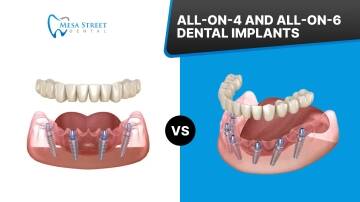
- All-on-4 dental implants
- All-on-6 dental implants
The implants act as anchors. The replacement teeth attach to those implants, creating a stronger and more stable option than traditional removable dentures.
Full-mouth dental implants can help restore chewing function, improve bite support, support facial structure, and provide natural-looking teeth.
How Do All-on-4 Dental Implants Work?
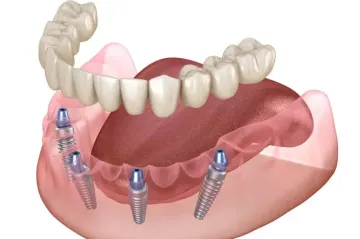
All-on-4 dental implants work by using four implants to support a full arch of replacement teeth. The implants are placed in specific positions in the jawbone to maximize support. In many cases, the back implants are angled to use available bone more effectively.
All-on-4 is often used for patients who are missing most or all teeth in one arch. It may be an option for people who want fixed replacement teeth instead of removable dentures.
The process may include extractions, implant placement, temporary teeth, healing, and a final full-arch restoration. For patients missing most or all teeth, All-on-4 dental implants in El Paso, TX may provide a full-arch replacement option with fewer implants than replacing every tooth individually.
How Do One-Day Dental Implants Work?
One-day dental implants usually mean the dentist places the implant and attaches a temporary tooth or temporary full-arch restoration on the same day. This does not mean the implant is fully healed in one day.
The implant still needs time to bond with the jawbone through osseointegration. During the healing period, patients must follow eating and care instructions to avoid placing too much pressure on the implant.
One-day implants may be possible when the patient has good bone support, healthy gum tissue, and enough implant stability at the time of placement.
How Do 24-Hour Dental Implants Work?
24-hour dental implants are similar to one-day dental implants. The phrase usually refers to receiving implants and temporary replacement teeth within a short time frame, sometimes within 24 hours.
The important thing to understand is that the temporary teeth are not the final healing result. The jawbone still needs time to heal around the implant posts. After healing, the final restoration is made and attached.
Not every patient qualifies for 24-hour dental implants. A dentist must check bone density, gum health, bite pressure, infection risk, and overall oral health before recommending this option.
What Are Screwless Dental Implants and How Do They Work?
The term screwless dental implants usually refers to a cement-retained implant restoration. This does not always mean there is no implant post in the jawbone. In many cases, the implant is still placed in the bone, but the crown is attached to the abutment with dental cement instead of being held by a visible screw access hole.
There are two common ways an implant crown can be attached:
- Screw-retained restoration: The crown is attached with a small screw through an access hole.
- Cement-retained restoration: The crown is cemented onto the abutment, which is why some people call it “screwless.”
Both options can work well when used in the right case. The best choice depends on implant position, bite, appearance goals, gum tissue, and how easy the restoration may need to be repaired or removed in the future.
Are Dental Implants Permanent?
Dental implants are designed to be a long-term tooth replacement option. The implant post can last many years with good care, healthy gums, and regular dental checkups. However, the dental crown, bridge, or full-arch restoration may need maintenance or replacement over time.
Dental implants still require proper oral hygiene. Plaque and bacteria can affect the gum tissue and bone around an implant. This can lead to implant problems if not treated early.
Who Is a Good Candidate for Dental Implants?
A good candidate for dental implants usually has healthy gums, enough jawbone support, and good overall oral health. The patient should also be able to heal properly after oral surgery.
You may be a candidate for dental implants if you have:
- One or more missing teeth
- Loose or uncomfortable dentures
- A tooth that cannot be saved
- Enough jawbone for implant placement
- Healthy gums
- Good daily oral hygiene
- No uncontrolled health conditions that affect healing
Patients with bone loss, gum disease, diabetes, smoking habits, or certain medical conditions may still be able to get dental implants, but they may need additional planning or treatment first.
What Can Dental Implants Help With?
Dental implants can do more than fill a gap in your smile. They can help restore daily function and long-term oral health.
Dental implants may help with:
- Replacing missing teeth
- Restoring chewing function
- Improving bite support
- Supporting natural-looking teeth
- Reducing movement from removable dentures
- Supporting the jawbone after tooth loss
- Improving speech clarity in some cases
- Restoring confidence in the smile
- Supporting full-mouth smile restoration
For many patients, implants feel more stable than removable tooth replacement options because they are anchored in the jawbone.
How Long Does the Dental Implant Process Take?
The dental implant process can take a few months or longer, depending on the case. A simple single-tooth implant may take less time than full-mouth dental implants or cases that require bone grafting.
Treatment time depends on:
- Number of missing teeth
- Need for tooth extraction
- Need for bone grafting
- Jawbone healing
- Gum tissue health
- Type of implant restoration
- Whether temporary teeth are placed
- Overall health and healing ability
Even when temporary teeth are placed the same day, the jawbone still needs time to fully heal before the final restoration is completed.
How to Care for Dental Implants
Dental implants need daily care, just like natural teeth. While implants cannot get cavities, the gum tissue and bone around them can still become infected or inflamed.
To care for dental implants:
- Brush twice a day
- Floss or clean around implants daily
- Use tools recommended by your dentist, such as interdental brushes or water flossers
- Visit your dentist for regular exams and cleanings
- Avoid chewing ice or very hard objects
- Wear a nightguard if you grind your teeth
- Do not ignore bleeding, swelling, pain, or looseness
Good home care and regular dental visits help protect the implant, gums, bone, and restoration.
When Should You Talk to a Dentist About Dental Implants?
You should talk to a dentist about dental implants if you are missing one tooth, several teeth, or a full arch of teeth. You should also schedule a consultation if you have loose dentures, trouble chewing, tooth loss, or a damaged tooth that may need extraction.
A dentist can check your oral health, take dental X-rays or 3D imaging, review your bone density, and explain which implant treatment is right for your needs.
If you are considering dental implants in El Paso, TX, schedule a consultation with Mesa Street Dental to learn whether single implants, full-mouth dental implants, All-on-4, or another treatment option is best for your smile.
Final Thoughts
Dental implants work by replacing missing tooth roots with implant posts placed in the jawbone. After healing, the implant supports an abutment and dental crown, bridge, denture, or full-arch restoration.
The key part of the dental implant process is osseointegration, where the jawbone bonds with the implant post. This creates the stability needed for chewing, speaking, and long-term tooth replacement.
Dental implants can replace one missing tooth, several missing teeth, or a full mouth of teeth. Whether you are considering a single tooth implant, one-day dental implants, 24-hour dental implants, All-on-4, or full-mouth dental implants, the right treatment plan starts with a dental exam, imaging, and a personalized consultation.