All-on-4 and All-on-6 dental implants can both replace a full arch of missing teeth. The main difference is the number of implants used, but the right choice depends on your bone health, bite, budget, and treatment goals
If you are missing most or all of your teeth, you may have already heard about All-on-4 dental implants and All-on-6 dental implants.
At first, they sound almost the same.
Both can replace a full upper or lower arch of teeth. Both are designed to feel more secure than traditional removable dentures. Both can help restore chewing, speaking, and smile confidence.
So what is the real difference?
The simple answer is this:
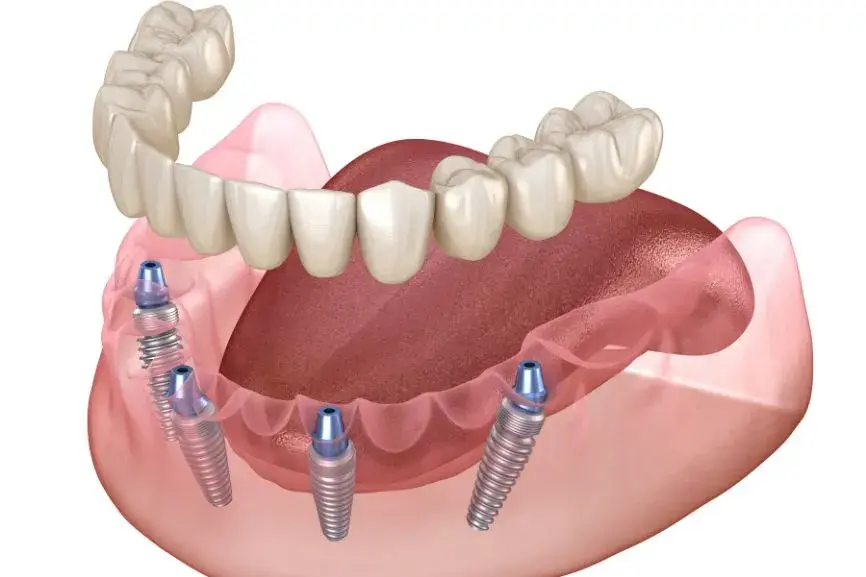
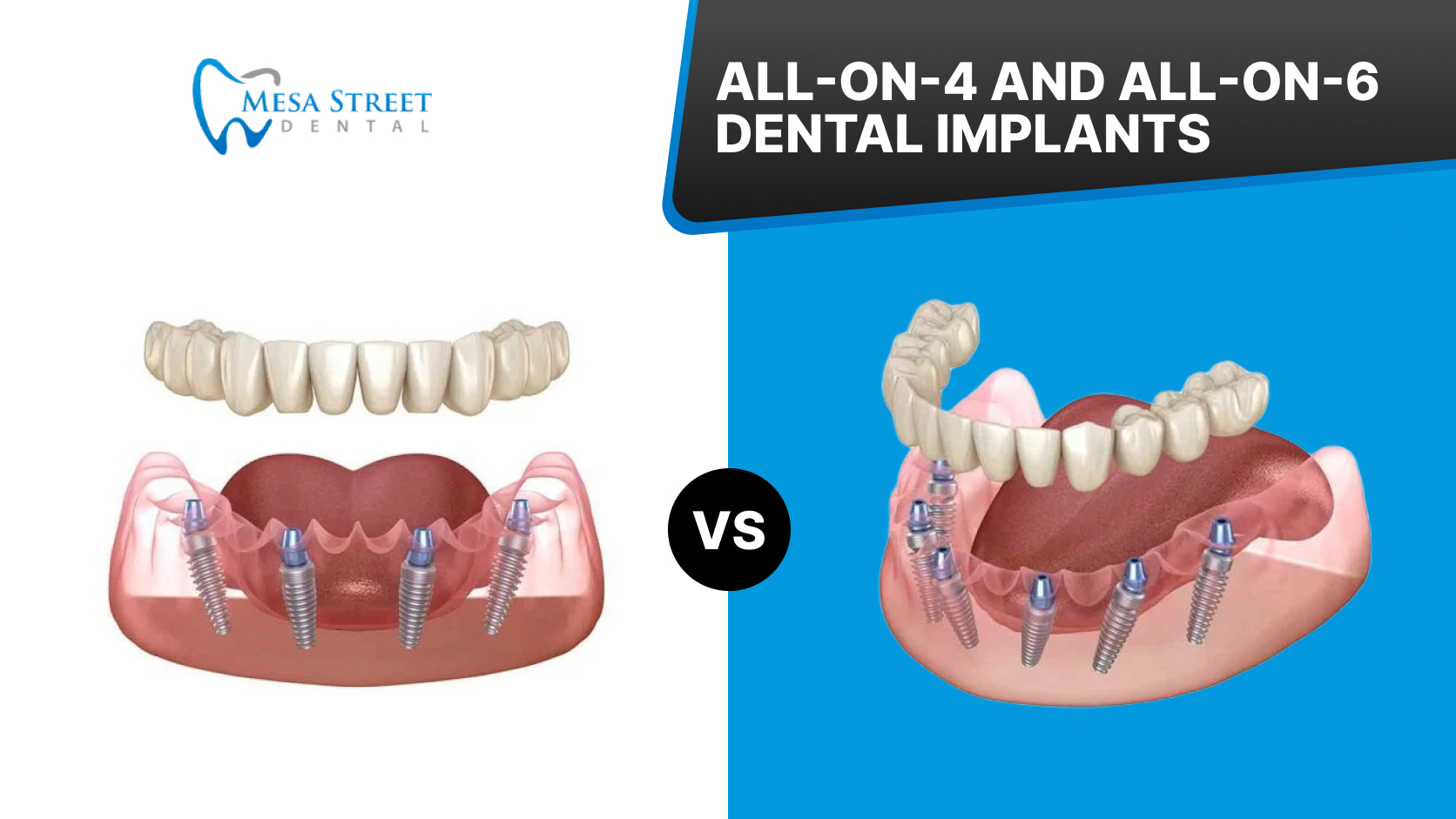
All-on-4 uses four dental implants to support a full arch of replacement teeth. All-on-6 uses six dental implants to support a full arch.
But the full answer is a little deeper.
More implants can sometimes mean more support, but that does not automatically mean All-on-6 is better for every patient. In some cases, All-on-4 may be the smarter, simpler, and more cost-effective option. In other cases, All-on-6 may offer extra stability, especially if the patient has strong enough bone and needs more support across the jaw.
At Mesa Street Dental in El Paso, All-on-4 implants are described as a full-arch solution using four carefully placed implants to support an entire arch of teeth. The practice also highlights modern technology such as CBCT/3D X-rays for treatment planning.
Quick Summary: All-on-4 vs All-on-6
| Feature | All-on-4 | All-on-6 |
| Number of implants | 4 implants per arch | 6 implants per arch |
| Best for | Many full-arch cases | Patients who may need extra support |
| Surgery level | Usually fewer implants, less surgical work | More implants, more surgical planning |
| Bone needs | May work well when back jawbone is limited | Usually needs enough bone for 6 implants |
| Cost | Usually lower than All-on-6 | Usually higher because more implants are used |
| Stability | Strong and reliable when planned well | May offer more support in some cases |
| Healing | Depends on patient health and procedure | Depends on patient health and procedure |
| Final choice | Based on exam, scans, and goals | Based on exam, scans, and goals |
What Are All-on-4 Dental Implants?
All-on-4 dental implants are a full-arch tooth replacement option.
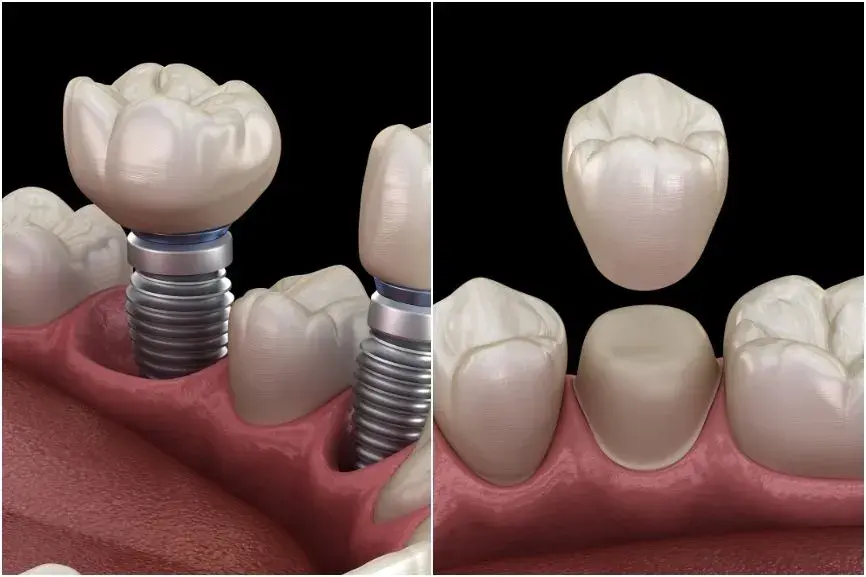
Instead of placing one implant for every missing tooth, the dentist places four implants in the jaw. These implants support a full set of replacement teeth.
This means one arch can be restored with fewer implants.
For example:
- Upper arch = top teeth
- Lower arch = bottom teeth
If you are missing all upper teeth, All-on-4 may replace the full upper arch. If you are missing all lower teeth, it may replace the lower arch. Some patients may need both arches restored.
Mesa Street Dental explains that All-on-4 implants use four implants to support a fixed prosthesis and are designed for patients who have lost most or all of their teeth.
What Are All-on-6 Dental Implants?
All-on-6 dental implants are also used to replace a full arch of missing teeth.
The difference is that six implants are placed instead of four.
Those extra two implants may help spread biting pressure across more points in the jaw. This can be helpful for some patients, especially when they have enough jawbone and need extra support for their full-arch restoration.
All-on-6 may be considered when:
- The patient has enough bone volume
- The bite is strong or heavy
- The dentist wants more support points
- The final bridge needs extra stability
- The patient wants a more reinforced full-arch option
But again, more implants does not automatically mean better treatment for every person. A dental implant plan should be based on your mouth, not just the number in the name.
Main Difference Between All-on-4 and All-on-6
The biggest difference is the number of implants.
| Treatment | Number of Implants | What They Support |
| All-on-4 | 4 implants | One full arch of replacement teeth |
| All-on-6 | 6 implants | One full arch of replacement teeth |
But that number affects other things too:
- Treatment cost
- Surgery time
- Healing process
- Bone requirements
- Bite support
- Treatment planning
- Final restoration design
Think of it like building a table.
A strong table can stand on four legs if it is designed correctly. But in some cases, six legs may give extra support. The best design depends on the size of the table, the material, and how much weight it needs to handle.
Dental implants work in a similar way.
Is All-on-6 Stronger Than All-on-4?
All-on-6 can provide more support points because there are six implants instead of four.
That can help distribute chewing forces across a wider area. For some patients, this may be helpful.
But it is not always true that All-on-6 is automatically “better.”
Clinical planning matters more than just implant count. The International Team for Implantology notes that, for complete-arch fixed prostheses, studies have not shown a statistically significant implant survival difference between fewer than five implants and five or more implants when supporting a fixed dental prosthesis.
That means a well-planned All-on-4 case can be very successful for the right patient.
The better question is not:
“Which one has more implants?”
The better question is:
“Which one fits my bone, bite, health, and long-term goals?”
Bone Health Matters a Lot
Your jawbone is one of the biggest factors in choosing between All-on-4 and All-on-6.
When teeth are missing for a long time, the jawbone can shrink. This is because the bone no longer gets the same stimulation from tooth roots.
Dental implants help by acting like artificial tooth roots. The FDA explains that dental implants are surgically placed in the jawbone and can help improve quality of life and health after tooth loss, but they also require proper planning and come with surgical risks.
With All-on-4, the back implants are often angled to make better use of available bone. This can sometimes reduce the need for bone grafting.
With All-on-6, there must usually be enough bone to support six implants in good positions.
All-on-4 vs All-on-6: Bone Requirements
| Bone Situation | Possible Better Fit |
| Limited back jawbone | All-on-4 may be considered |
| Good bone volume across the jaw | All-on-6 may be possible |
| Severe bone loss | Additional treatment may be needed |
| Avoiding bone grafting is a goal | All-on-4 may sometimes help |
| Extra support is needed | All-on-6 may be considered |
Only a dental exam and 3D imaging can show what is realistic.
Cost Difference Between All-on-4 and All-on-6
All-on-6 usually costs more than All-on-4.
Why?
Because it usually involves:
- More implants
- More surgical placement
- More materials
- More planning
- Possibly more chair time
- More complex restoration support
Mesa Street Dental’s All-on-4 cost guide says the average cost of All-on-4 dental implants in the U.S. can range between $12,000 and $25,000 per jaw, depending on location, materials, provider experience, and other factors.
All-on-6 may cost more because two additional implants are involved. But the exact price depends on the patient’s needs.
Cost can change based on:
- Upper arch, lower arch, or both
- Tooth extractions
- Bone grafting
- Gum health
- Sedation
- Temporary teeth
- Final teeth material
- Lab work
- Follow-up visits
- Insurance and financing options
Is All-on-4 More Affordable?
In many cases, yes.
All-on-4 can be more affordable than All-on-6 because it uses fewer implants. It may also reduce the need for certain extra procedures in some patients.
But cheaper is not always the goal.
The goal is to get the right treatment for your mouth.
A patient with strong bone and a heavy bite may benefit from extra implant support. Another patient with limited bone may be better suited for All-on-4.
That is why a dentist should review your condition before recommending one option.
Which Option Looks More Natural?
Both All-on-4 and All-on-6 can look natural when designed well.
The final appearance depends more on the prosthetic teeth than the number of implants.
A natural-looking result depends on:
- Tooth shape
- Tooth color
- Smile line
- Gum appearance
- Bite design
- Face shape
- Material quality
- Lab craftsmanship
- Dentist planning
So if your main concern is appearance, both options may work.
The number of implants affects support. The design of the final bridge affects the look.
Which Option Feels More Stable?
Both options are designed to be stable.
Compared to traditional dentures, implant-supported teeth usually feel much more secure because they are attached to implants instead of resting loosely on the gums.
All-on-6 may offer extra support points, which can help in some cases. But a well-planned All-on-4 restoration can also feel very stable.
Mesa Street Dental’s All-on-4 procedure page explains that All-on-4 implants are anchored in the jaw and can improve comfort and stability compared with traditional dentures.
Recovery: All-on-4 vs All-on-6
Recovery depends on the patient, not only the implant number.
Some patients heal quickly. Others need more time.
Recovery may depend on:
- Overall health
- Gum health
- Bone quality
- Smoking history
- Diabetes control
- Number of extractions
- Whether bone grafting is needed
- Upper or lower arch treatment
- How closely aftercare instructions are followed
All-on-6 involves placing more implants, so the surgical process may be more involved. But that does not mean recovery is always harder for every patient.
Your dentist will explain what to expect based on your treatment plan.
Who May Be a Good Candidate for All-on-4?
All-on-4 may be a good option for patients who:
- Are missing most or all teeth in an arch
- Want a fixed option instead of removable dentures
- Have limited bone in some areas
- Want fewer implants
- Want a full-arch solution
- Want improved chewing and smile confidence
- Want a treatment that may avoid some grafting in selected cases
It may also be helpful for patients who are tired of loose dentures or uncomfortable removable appliances.
Who May Be a Good Candidate for All-on-6?
All-on-6 may be a good option for patients who:
- Have enough jawbone for six implants
- Need extra support across the arch
- Have stronger bite pressure
- Want more implant support points
- Are replacing a full upper or lower arch
- Are healthy enough for a slightly more involved procedure
- Want a fixed full-arch restoration
Still, the final decision should be based on scans, exam findings, and your dentist’s recommendation.
All-on-4 vs All-on-6: Pros and Cons
| Option | Pros | Things to Consider |
| All-on-4 | Fewer implants, often lower cost, may work with limited bone, fixed full-arch solution | Not every patient is a candidate |
| All-on-6 | Extra support points, may distribute force more widely, can be helpful for strong bites | Usually costs more and needs enough bone |
| Both | Can restore a full smile, improve chewing, and feel more secure than dentures | Requires surgery, planning, healing, and maintenance |
What About Traditional Dentures?
Traditional dentures are removable.
They can replace missing teeth, but they may move while eating or speaking. Some patients also feel that dentures do not give them the chewing power or confidence they want.
All-on-4 and All-on-6 are different because the teeth are supported by implants.
This can help with:
- Better stability
- More confident chewing
- Less slipping
- Better speech comfort
- A more secure smile
- Less worry in social situations
Dental implants are commonly used to support crowns, bridges, and dentures, and once healed, they can function like natural teeth.
Questions to Ask Before Choosing All-on-4 or All-on-6
Before you decide, ask your dentist these questions:
| Question | Why It Matters |
| Do I have enough bone for implants? | Bone support affects treatment options |
| Do I need All-on-4 or All-on-6? | Helps you understand the recommendation |
| Will I need bone grafting? | Can affect cost and timeline |
| How many teeth will be replaced? | Clarifies the final result |
| What material will my final teeth use? | Affects appearance and durability |
| How long will treatment take? | Helps you plan recovery |
| What is included in the cost? | Helps avoid surprise fees |
| Do you offer financing? | Helps with affordability |
| How do I care for the implants? | Long-term care matters |
A good consultation should make you feel informed, not pressured.
Why Treatment Planning Is So Important
All-on-4 and All-on-6 are not one-size-fits-all treatments.
A dentist must check:
- Bone height
- Bone width
- Gum health
- Bite force
- Smile shape
- Medical history
- Jaw position
- Sinus location
- Nerve location
- Long-term maintenance needs
That is why modern imaging is important.
Mesa Street Dental lists CBCT/3D X-rays among its modern technologies, along with All-on-4 dental implants and same-day crowns.
How Mesa Street Dental Helps Patients in El Paso
Mesa Street Dental offers All-on-4 dental implants in El Paso for patients who are missing multiple teeth and want a secure, natural-looking smile. Their All-on-4 page explains that the treatment is designed to restore a full, functional smile with four implants supporting an entire arch.
Patients may choose Mesa Street Dental for:
- All-on-4 dental implants
- Dental implant consultations
- Full-arch smile restoration
- Modern 3D imaging
- Personalized treatment planning
- A comfortable dental experience
- Clear guidance about options
- Help understanding cost and next steps
If you are comparing All-on-4 and All-on-6, the best next step is a personalized exam.
Simple Way to Remember the Difference
Here is the easiest way to remember it:
All-on-4 = four implants supporting a full arch.
All-on-6 = six implants supporting a full arch.
But the best choice is not based only on the number.
It is based on:
- Your bone
- Your bite
- Your budget
- Your smile goals
- Your health
- Your dentist’s planning
Conclusion
All-on-4 and All-on-6 dental implants are both full-arch solutions for patients missing most or all of their teeth. The main difference is simple:
All-on-4 uses four implants.
All-on-6 uses six implants.
All-on-4 may be a great option for patients who want a stable, fixed smile with fewer implants. It may also be helpful when there is limited bone in certain areas.
All-on-6 may be a good option for patients who have enough bone and may benefit from extra support across the arch. Neither option is automatically better for everyone. The right choice depends on your mouth, your bone health, your bite, your goals, and your treatment plan.
If you are in El Paso and want to replace missing teeth with a full-arch implant solution, Mesa Street Dental can help you understand whether All-on-4, All-on-6, or another implant option may be right for you.